
Professor of Biological Sciences
Department
of Biological Sciences,
AAAS
Fellow
Governors
Award for Excellence in Science 2016
Ph.D., 1973,
ely@sc.edu or 803-777-2768
Bacterial Genome Evolution
We are studying the genomes of Caulobacter
strains isolated from natural sources and the bacteriophages that attack them
to understand the roles of genome rearrangements, mutations, and horizontal
gene transfer in genome evolution. This project involves the isolation of
bacteria and bacteriophages, characterization of the isolates, genome
sequencing, and bioinformatics. In addition, a second project involves strains
that either stimulate or inhibit plant growth to determine the molecular
mechanisms responsible for these bacterial/plant interactions.
Publications
Dr. Ely’s dissertation research led to the discovery of attenuation, a completely new system for regulating gene expression in enteric bacteria. The production of the enzymes used to synthesize many amino acids only occurs if increased concentrations of the individual amino acids would actually increase the rate of protein synthesis in the cell (Ely, B. 1974. Physiological studies of Salmonella histidine operator-promoter mutants. Genetics 78:593-606).
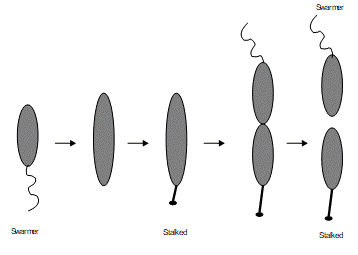
As a professor, Dr. Ely’s first major project was to develop a series of techniques that would facilitate the genetic analysis of Caulobacter so that the cell cycle control of gene expression could be studied in an organism as simple as a bacterium. His success is summarized in a review article published in 1991 (Ely, B. Genetics of Caulobacter crescentus. 1991. In: Bacterial Genetics Systems. Miller, J.H., ed. Methods in Enzymology. 204:372-384. San Diego: Academic Press, Inc.).
Subsequently, Dr. Ely pioneered the use of new technologies in his research. Dr Ely was the first person to use restriction enzymes to show that two phage genomes differed from each other (Johnson, R. C., N. B. Wood, and B. Ely. 1977. Isolation and characterization of bacteriophage for Caulobacter crescentus. J. Gen. Virol. 37:323-335. https://doi.org/10.1099/0022-1317-37-2-323).
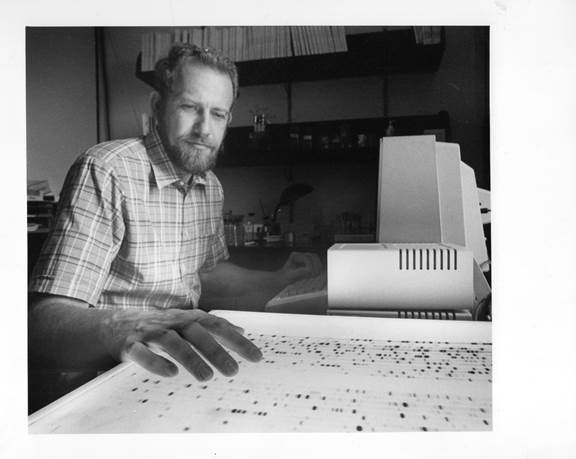
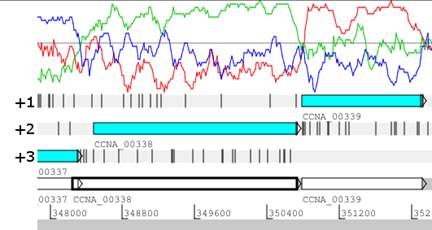
Dr. Ely’s laboratory was the first to perform Sanger nucleotide sequencing in South Carolina (Schoenlein, P.V., L.S. Gallman, M.E. Winkler, and B. Ely. 1990. Nucleotide sequence of the Caulobacter crescentus flaF and flbT genes and an analysis of codon usage in organisms with G + C-rich genomes. Gene 93:17-25. And see picture above). As a result, he served as an expert witness when DNA evidence was first used as evidence in a criminal case in Columbia, and he helped SLED set up their DNA crime lab.
Dr. Ely started using the groundbreaking PCR (polymerase chain reaction) technique before commercial thermocyclers were available. When he bought his first thermocycler, the serial number was 0007.
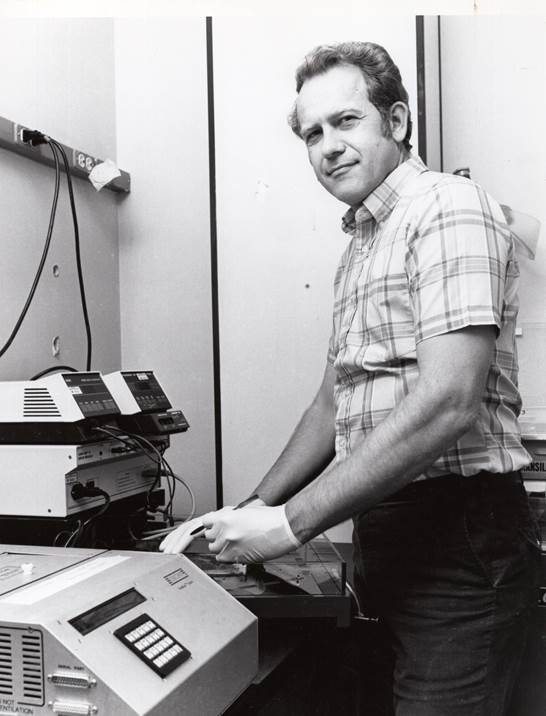
Dr. Ely’s laboratory was the second Laboratory in the world
to use Pulsed Field Gel Electrophoresis to separate large DNA molecules derived
from bacterial chromosomes. As a result, his laboratory was able to construct a
physical map of the Caulobacter chromosome (Ely, B., and C. J. Gerardot. 1988. Use of
pulsed field gradient gel electrophoresis to construct a physical map of the Caulobacter crescentus
genome. Gene 68:323-333).
Dr. Ely used his physical map and individual gene sequences to complete the final assembly of the Caulobacter crescentus genome between Christmas and New Years day in winter of 2000 (Nierman, W. C. and 36 co-authors. 2001. Complete genome sequence of Caulobacter crescentus. Proceedings of the National Academy of Science USA 98: 4136-4141).
Dr. Ely’s laboratory pioneered the use of DNA techniques for the genetic analysis of fish populations (Han, K., L. Li, G. M. Leclerc, A. M. Hays, and B. Ely. 2000. Isolation and characterization of microsatellite loci for striped bass (Morone saxatilis). Molecular Biotechnology 2:405-408.
Dr. Ely’s laboratory determined the reproductive strategies used by natural populations of striped bass (Liu, J. and B. Ely. 2009. Sibship reconstruction demonstrates the extremely low effective population size of striped bass Morone saxatilis in the Santee-Cooper system, South Carolina, USA. Molecular Ecology 18:4112-4120).
Dr. Ely’s laboratory demonstrated that highly migratory fish such as swordfish and bluefin tuna exist as genetically defined subpopulations (Alvarado Bremer, J. R., J. Viñas, J. Mejuto, B. Ely, and C. Pla. 2005. Comparative phylogeography of Atlantic bluefin tuna and swordfish: The combined effects of vicariance, secondary contact, introgression, and population expansion on the regional phylogenies of two highly migratory pelagic fishes. Molecular Phylogenetics and Evolution 26:169-187).
Dr. Ely showed that
mitochondrial DNA analyses cannot be used to trace African American ancestry to
specific ethnic groups in Africa
(Ely, B., J. L. Wilson, F. Jackson, and B. A. Jackson. 2006. African
American mitochondrial DNAs often match mtDNAs found
in multiple African ethnic groups. BMC Biology 4:34).
For his first foray into bioinformatics, Dr. Ely showed that
bacterial genomic GC content influenced the distribution of the amino acids used
by those cells to make proteins (Lightfield, J., N.
R. Fram, and B.
Ely. 2011. Across bacterial phyla distantly-related
genomes with similar genomic GC content have similar patterns of amino acid
usage. PLoS ONE 6(3): e17677).
Subsequently Dr. Ely partnered with Dr. Friedman to
demonstrate that the methods used to detect the transfer of genetic information
were quite flawed (Friedman, R. and B. Ely. 2012. Codon usage methods for horizontal gene transfer detection generate
an abundance of false positive and false negative results. Current Microbiology
65:639-642. doi:10.1007/s00284-012-0205-5).
As the cost of bacterial genome sequencing came down, Dr. Ely’s laboratory began sequencing other Caulobacter genomes and found that genome rearrangements commonly occurred (Ash, K., T. Brown, T. Watford, L. E. Scott, C. Stephens, and B. Ely. 2014. A comparison of the Caulobacter NA1000 and K31 genomes reveals extensive genome rearrangements and differences in metabolic potential. Open Biology 4:140128 Doi: 10.1098/rsob.140128). Nevertheless, the essential genome of these bacteria was conserved (Scott, D., and B. Ely. 2016. Conservation of the essential genome among Caulobacter and Brevundimonas species. Current Microbiology 72:503-510 DOI: 10.1007/s00284-014-0721-6).
A follow up study examined how closely related bacterial genomes have evolved under natural conditions in contrast to laboratory experiments (Ely, B., K. Wilson, K. Ross, D. Ingram, T. Lewter, J. Herring, D. Duncan, A. Aikins, and D. Scott. 2018. Genome evolution observed in wild isolates of Caulobacter crescentus. Current Microbiology 76: 159-167. doi.org/10.1007/s00284-018-1606-x).
Also, a study of a hybrid genome led to a new model for the
recombination process that occurs during horizontal gene transfer (Ely, B. 2020. Recombination and gene loss occur
simultaneously during bacterial horizontal gene transfer. PLoS
ONE 15(1): e0227987. DOI: 10.1371/journal.pone.0227987).
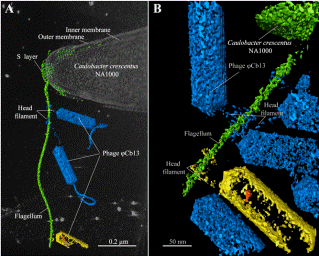
Recently, Dr. Ely’s laboratory returned to studies of
naturally occurring Caulobacter bacteriophages. A study of newly
isolated jumbo phages revealed that although they have similar morphologies and
conserved gene order their genomes have diverged enough that they should be classified
as four independent genera (Wilson,
K. and B. Ely.
2019. Analyses of four new Caulobacter
Phicbkviruses indicate independent lineages. Journal
of General Virology 100:321-331. DOI 10.1099/jgv.0.001218). Subsequently, The
International Committee for the taxonomy of viruses named one of these new genera
Bertelyvirus! Additional studies are underway
to characterize nearly 100 new phage isolates and examine naturally occurring phage
genome evolution.
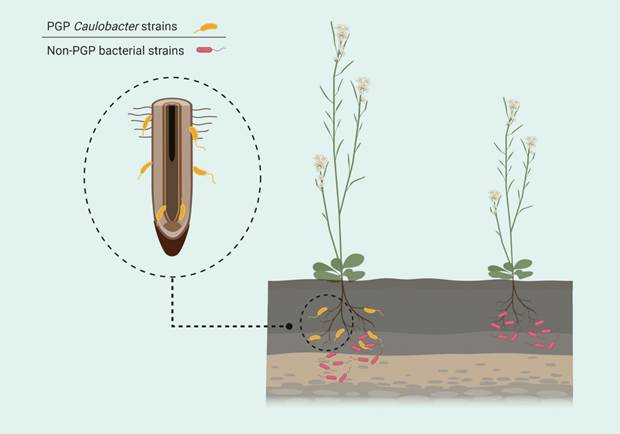
We now know that Caulobacter interacts
with plant roots, and we have shown that some strains stimulate plant growth
while others inhibit plant growth (Berrios, L. and B. Ely. 2020. Plant
growth enhancement is not a conserved feature in the Caulobacter genus. Plant and Soil 449:81–95 DOI:
10.1007/s11104-020-04472-w). Additional studies are underway to examine the
interactions between multiple Caulobacter strains that are associated with
the same host plant.